
A lush, green lawn is a source of pride for many homeowners. But, bare patches can quickly spoil its look. Did you know that nearly 70% of homeowners face bare spots in their lawns at some point? These patches can be due to soil compaction, pet urine, or bad mowing habits.

Knowing why bare patches happen is key to fixing and preventing them. By tackling these issues, you can make your lawn healthy and green again. Good lawn care tips and lawn repair techniques can help you get a lush lawn.
Key Takeaways
- Identify the causes of bare patches in your lawn.
- Apply effective lawn care tips to prevent bare spots.
- Use appropriate lawn repair techniques to fix bare patches.
- Maintain a healthy lawn through proper care and maintenance.
- Consider grass patch solutions for immediate repair.
Understanding Bare Patches in Lawns
Knowing why bare patches form is key to a healthy lawn. These patches can ruin your yard’s look and show deeper problems that need fixing.
What Causes Bare Patches to Form
Bare patches come from many things, like heavy foot traffic, disease, and chemical damage. Soil compaction, pests, and diseases play a big role too.
Why Addressing Bare Patches Matters for Lawn Health
Fixing bare patches quickly is vital to keep your lawn healthy. If ignored, these spots can attract weeds and pests, spreading to more of your lawn. Knowing the causes and using good lawn care can stop these patches from being a big issue.
Identifying the Root Causes of Lawn Bare Spots
To fix bare spots in your lawn, you need to know why they happen. These spots can come from many things like weather, how you take care of your lawn, and pests.
Soil Compaction and Poor Drainage
Soil that’s too tight and doesn’t drain well can cause bare spots. This stops air, water, and nutrients from getting to your grass roots. Improving drainage and loosening the soil can solve these problems.
Pest and Disease Damage
Pests and diseases can really hurt your lawn, making bare spots. It’s important to check your lawn often for pests or diseases. Appropriate treatments can stop these problems and keep your lawn healthy.
Pet Urine Damage
Pet urine can harm your lawn, causing bare spots. You can fix the area with water and use pet-friendly lawn treatments to stop more damage.
Improper Mowing and Maintenance Practices
Wrong mowing and lawn care can stress your lawn, causing bare spots. Keeping your mower at the right height and following a regular lawn care schedule helps your grass grow well.
Assessing Your Lawn’s Overall Health
Checking your lawn’s health is key to fixing bare spots and stopping more damage. Look at the soil, drainage, and sunlight.
Conducting a Simple Soil Test
Testing your soil is a must. It shows the pH level and nutrient levels.
Interpreting Soil Test Results
After getting your results, it’s important to understand them. A pH of 6.0 to 7.0 is best for most grass. It tells you if your soil needs more nitrogen, phosphorus, or potassium.
Adjusting Soil pH and Nutrients
Change your soil’s pH and nutrients based on the test. Lime raises pH, sulfur lowers it. Fertilizers fix nutrient gaps.
Evaluating Drainage and Sunlight Patterns
Drainage and sunlight are also crucial. Bad drainage causes waterlogged soil. Not enough sunlight makes grass weak and sparse.
| Factor | Ideal Condition | Common Issues |
|---|---|---|
| Soil pH | 6.0-7.0 | Too high or too low |
| Drainage | Well-draining | Waterlogging |
| Sunlight | Adequate for grass type | Insufficient light |
By checking these areas and making changes, you can make your lawn healthier. It will fight off bare spots better.
Essential Tools and Materials for Lawn Repair
Having the right tools and materials is key for lawn repair techniques. Homeowners need these to fix bare spots and other lawn problems.
Basic Tools Every Homeowner Needs
For lawn repairs, you’ll need basic gardening tools. A garden rake, shovel, trowel, and lawn aerator are must-haves. A rake helps remove debris and loosen soil. A shovel is great for digging and moving soil or sod.
A trowel is useful for spreading seed or fertilizer. A lawn aerator improves drainage and reduces soil compaction.
Selecting the Right Grass Seed for Your Region
Choosing the right grass seed is vital for patchy lawn solutions. The type of grass that grows well depends on your area’s climate and soil.
Cool-Season vs. Warm-Season Grasses
Cool-season grasses like Kentucky bluegrass and perennial ryegrass do well in cooler climates. These areas have cold winters and moderate summers. On the other hand, warm-season grasses such as Bermudagrass and zoysiagrass thrive in hot summers and mild winters.
Drought-Resistant and Shade-Tolerant Options
If your lawn faces drought or shade, choose drought-resistant or shade-tolerant grasses. Drought-resistant grasses like buffalo grass need less water. Shade-tolerant grasses, such as fine fescue, can grow well in shaded areas.
| Grass Type | Climate Suitability | Maintenance Needs |
|---|---|---|
| Kentucky Bluegrass | Cool-season | Medium to High |
| Bermudagrass | Warm-season | High |
| Fine Fescue | Cool-season | Low to Medium |

Understanding your lawn’s needs and choosing the right tools and materials helps. This way, you can keep your lawn healthy and looking great all year.
How to Prevent and Fix Bare Patches in Your Lawn
Bare patches in your lawn can look bad, but you can fix them. Keeping your lawn healthy needs good care and quick fixes.
Preventative Maintenance Schedule
Having a good maintenance plan helps avoid bare spots. This includes regular aeration, the right fertilization, and proper watering.
Regular Aeration Benefits
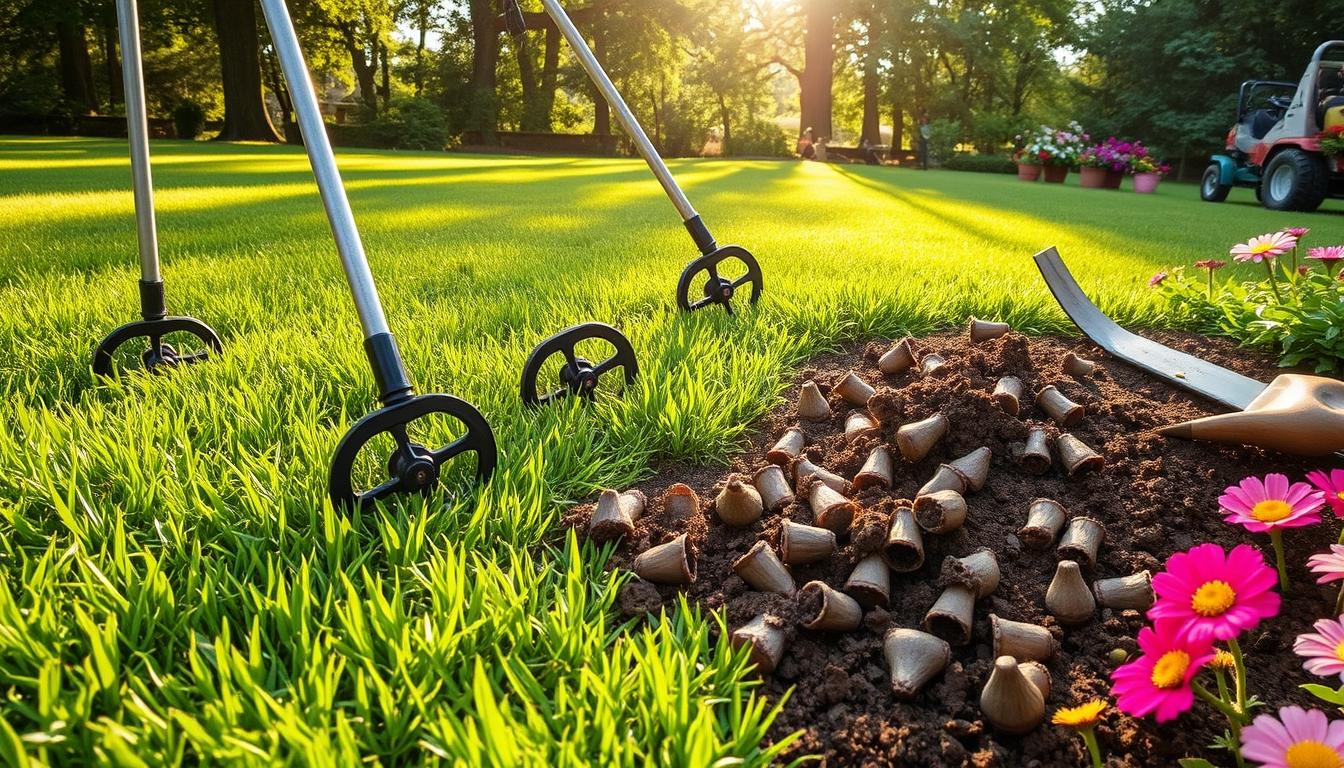
Aerating your lawn helps it breathe better. It makes the soil drain well, reduces compaction, and helps roots grow strong. This means making small holes in the soil to let air, water, and nutrients reach the roots.
Proper Fertilization Timing
Fertilizing at the right time keeps your lawn healthy. Fertilize during the growing season with a balanced fertilizer. This gives your grass the nutrients it needs to grow.
Appropriate Watering Practices
Watering deeply but not too often helps your grass grow strong. This makes it less likely to die from drought or other problems. Don’t water too much, as this can harm your lawn.
Early Intervention Techniques
Catching bare spots early helps fix them before they get worse. Check your lawn often for bare spots or signs of stress.
| Technique | Description | Benefits |
|---|---|---|
| Overseeding | Applying grass seed to bare areas | Fills in bare spots, improves lawn density |
| Fertilizer Application | Using targeted fertilizers on bare areas | Promotes healthy grass growth, enhances color |
| Soil Conditioning | Adding organic matter to improve soil quality | Enhances soil structure, improves drainage and aeration |
Using these steps can make your lawn look better and prevent bare spots. This keeps your lawn healthy and looking great.
Step-by-Step Guide to Repairing Small Bare Spots
Bare spots in your lawn are not just unsightly. They can also cause more damage if not fixed quickly. It’s important to repair these areas fast to keep your lawn healthy and looking good.
Preparing the Soil Surface
Before you start seeding, you need to get the soil ready. This involves two main steps:
Removing Dead Grass and Debris
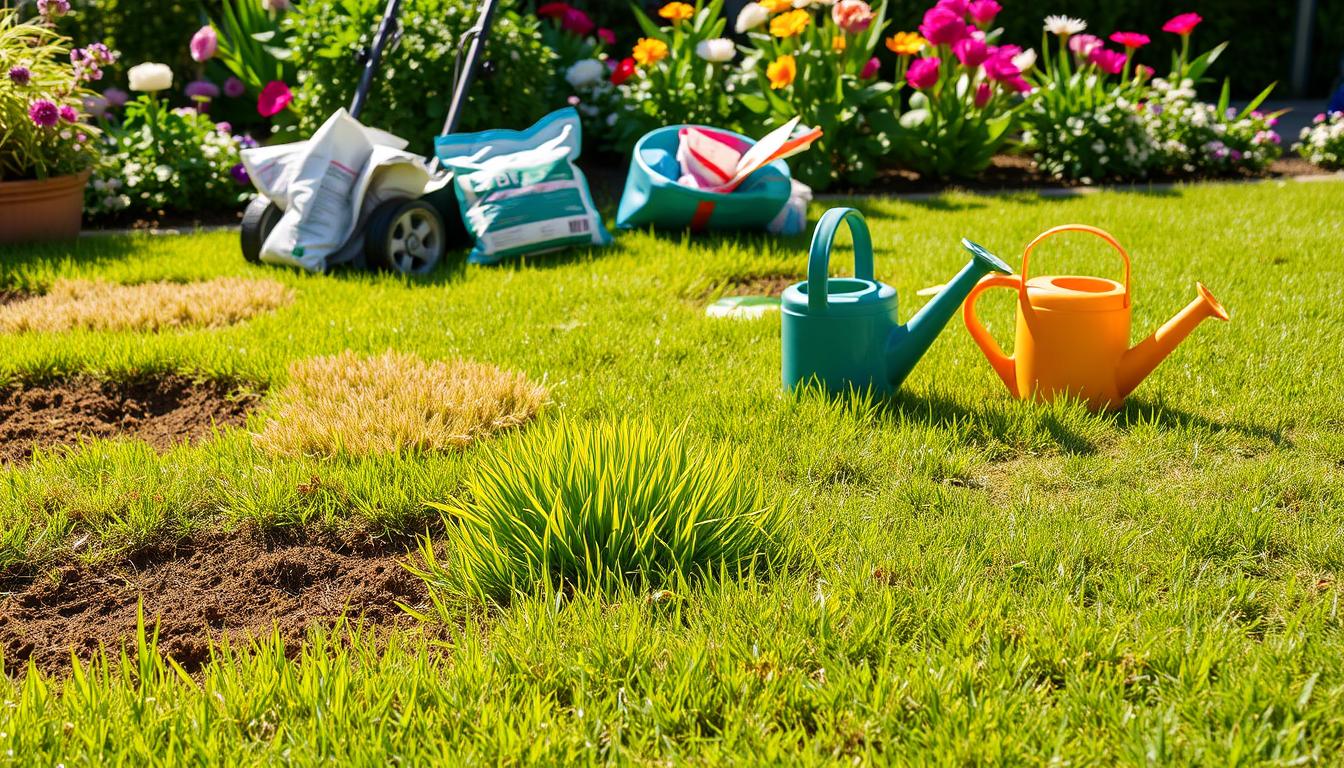
First, remove any dead grass and debris from the bare spot. Use a rake or garden fork to clean the area well. This makes it ready for new seed.
Loosening Compacted Soil
Next, use a fork to loosen the soil to a depth of 4-6 inches. This helps with drainage and lets roots grow deeper. It makes your lawn healthier.
Seeding Techniques for Small Areas
After preparing the soil, apply the right grass seed for your area. Spread the seed evenly over the bare spot, following the package’s instructions. Then, rake the seed into the soil gently to ensure good contact.
Proper Watering for New Seed
Keep the soil moist during the germination period, which is usually 7-14 days. Water lightly but often to prevent seed loss. Once the new grass is 2-3 inches tall, start to reduce watering. This helps the roots grow deeper.
| Task | Frequency | Notes |
|---|---|---|
| Watering | Daily | Keep soil moist during germination |
| Mowing | Weekly | Maintain at 2-3 inches height |
| Fertilizing | After 6 weeks | Use a balanced lawn fertilizer |
By using these lawn patching techniques and caring for your lawn, you can make it lush and healthy. Regular care and attention are crucial for successful lawn rejuvenation.
Tackling Larger Bare Areas with Sod
Sod is a quick fix for big bare spots, unlike seeding. It’s great for repairing bare lawn areas where you need fast results. Sod gives you a mature lawn right away, perfect for big patches.
When to Choose Sod Over Seed
Sod is best for big bare spots because it gives you an instant lawn. It’s a patchy grass solution that works right away, unlike seeding which takes time. Sod is also good for areas with lots of foot traffic or where erosion is a problem.
Proper Sod Installation Techniques
To install sod right, start by getting the soil ready. Clear out debris, till the soil 8-10 inches deep, and make the ground even. Lay the sod in a staggered pattern to avoid seams. Water it well to help it settle in.
Post-Installation Care for New Sod
After putting in sod, it needs the right care to grow. Keep it moist for a few weeks. Then, start to water it less as it gets stronger. Regular mowing and fertilizing will help it blend with your lawn. This will make your lawn look better overall, using grass restoration methods.
Addressing Specific Causes of Bare Patches
To fix bare patches, you need to find out why they happen and use the right fixes. Different things can cause bare spots, and knowing what they are is crucial for fixing your lawn.
Solutions for High-Traffic Areas
Keeping a lawn healthy in busy spots is tough. Two good ways to tackle this are making paths to steer traffic and picking strong grass types.
Creating Pathways to Redirect Traffic
Setting up paths or walkways helps steer foot traffic away from your lawn. This reduces damage and keeps your lawn looking good.
Using Tough Grass Varieties
Choosing grass that can handle a lot of foot traffic, like perennial ryegrass or tall fescue, helps keep your lawn healthy in busy areas.
Treating Pet Damage Effectively
Pet urine can really hurt your lawn, causing bare spots. To fix this, you need to treat the area and then reseed it.
Fixing Shade-Related Bare Spots
Shade can be hard on your lawn. To fix this, pick grass that does well in shade or find ways to get more sunlight.
Resolving Soil Compaction Issues
Soil that’s too compacted stops grass from growing well. Aerating the soil helps fix this and makes your lawn lush and green.
| Cause | Solution |
|---|---|
| High-Traffic Areas | Create pathways, use tough grass varieties |
| Pet Damage | Neutralize affected area, reseed |
| Shade-Related Issues | Choose shade-tolerant grass, increase sunlight |
| Soil Compaction | Aerate the soil |

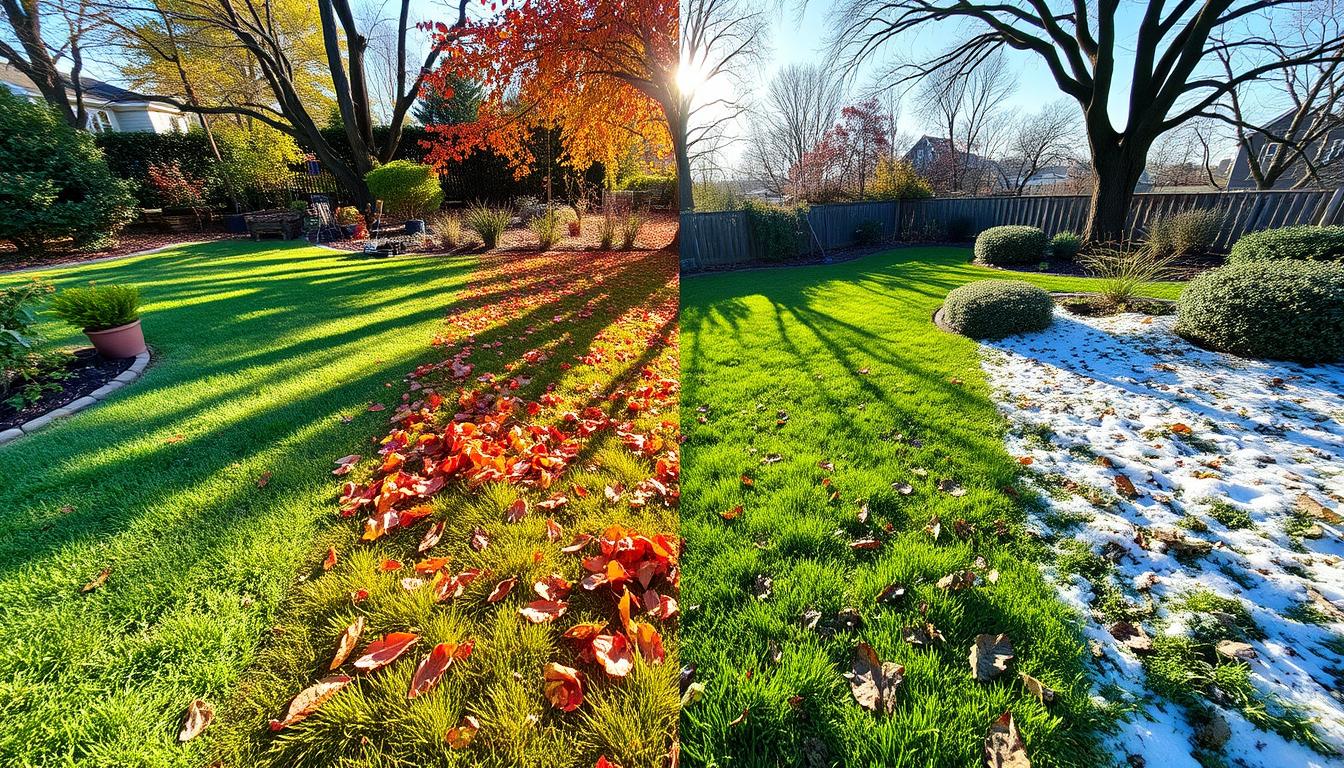
Seasonal Lawn Care to Prevent Future Bare Patches
To stop bare patches, follow a seasonal lawn care plan. This plan should meet your lawn’s changing needs all year.
Spring Lawn Maintenance
In spring, clean up debris and aerate the soil. This helps your lawn grow healthy. Use a balanced fertilizer to give it the nutrients it needs.
Summer Care Strategies
In summer, keep your lawn by mowing at the right height and watering deeply but not too often. This helps your lawn grow strong roots and fight drought better.
Fall Preparation Techniques
In fall, get your lawn ready for next year. Apply a fall fertilizer and overseed bare spots. This keeps your lawn dense and healthy.
Winter Protection Methods
In winter, protect your lawn from harm. Minimize foot traffic and use a winterizer fertilizer. This boosts root growth and prepares your lawn for spring.
| Season | Lawn Care Tasks | Benefits |
|---|---|---|
| Spring | Debris cleanup, aeration, balanced fertilizer | Promotes healthy growth, prevents bare patches |
| Summer | Mowing, deep watering | Encourages deep root growth, drought resistance |
| Fall | Fall fertilizer, overseeding | Maintains dense, healthy lawn |
| Winter | Minimizing foot traffic, winterizer fertilizer | Protects lawn, promotes root growth |
Troubleshooting Common Lawn Repair Problems
Fixing common lawn issues is key to a healthy lawn. Lawns can get bare spots even with good care. Knowing these problems helps homeowners fix them fast.
When New Grass Isn’t Growing
It’s frustrating when new grass doesn’t grow. Poor soil and not enough water are common reasons.
Seed Washing Away Issues
Seed washing away is a big problem, mainly on slopes or in rainy areas. Use straw or mulch to keep the seed in place until it grows.
Temperature and Timing Problems
Temperature and timing affect seed growth. Seed at the right time for your area and avoid bad weather.
Dealing with Recurring Bare Patches
Dealing with bare spots that keep coming back is tough. Find out why they happen, like pet urine or too much foot traffic. Then, change your lawn care to stop them from coming back.

Conclusion
A healthy, lush lawn is within reach with the right care. Knowing why bare spots happen and how to stop them saves time and effort. By checking your lawn’s health and fixing bare spots, you can keep your lawn looking great.
Good lawn care mixes regular tasks like mowing and watering with fixing specific problems. This guide shows you how to keep your lawn healthy and avoid bare spots.
Effective lawn care means a regular maintenance plan and quick action when needed. Proper watering and mowing are key. Follow these tips to have a beautiful lawn that makes your outdoor space better.
FAQ
What are the most common causes of bare patches in lawns?
Bare patches in lawns often come from soil compaction. They can also be caused by pests, diseases, pet urine, bad mowing, and poor drainage.
How can I identify the root cause of bare spots in my lawn?
Look for signs of pests, diseases, or pet damage in your lawn. Dig a small hole to check for soil compaction. Also, review your mowing and maintenance habits.
What type of grass seed should I use to repair bare spots?
Choose grass seed based on your area and lawn type. Cool-season grasses like Kentucky bluegrass work well in cooler climates. Warm-season grasses like Bermudagrass are better in warmer areas.
How do I properly prepare the soil for seeding or sodding?
Start by removing dead grass and debris. Loosen the soil to 8-10 inches deep. Level the area and add compost to improve soil quality.
What are some effective ways to prevent bare patches from forming in the first place?
Keep up a regular lawn care routine. This includes proper mowing, watering, and fertilizing. Also, tackle pests and diseases quickly. Aerating your lawn yearly helps prevent compaction.
Can I use sod to repair large bare areas, and if so, how do I install it?
Yes, sod is great for big bare spots. Prepare the soil like for seeding. Lay the sod tightly together and water well. Keep it moist while it establishes.
How can I fix shade-related bare spots in my lawn?
For shade spots, use grass that tolerates shade. Thin out trees to let more sunlight in. Adjust your mowing and watering for shade areas.
What are some seasonal lawn care tips to prevent future bare patches?
Keep mowing heights right, fertilize on time, and adjust watering with the weather. Aerate in spring or fall. Apply a winterizer in fall.
Why isn’t my new grass growing, and what can I do to fix the problem?
Check for poor watering, bad soil, or wrong seed choice. Change your watering, improve soil, and reseed if needed.
How can I deal with recurring bare patches in my lawn?
Find and fix the cause of bare spots. Use good lawn care, control pests, and improve soil to prevent future spots.